

A regular stands at the counter and grumbles: nothing new in the red sector for weeks, it’s getting boring. Yet that very sector was completely reset ten days ago - the news sat as an Instagram story for one evening, and after that it was gone. Meanwhile in the community WhatsApp someone asks whether anyone knows when the next reset is. A question that would have a clear answer, if it were written down anywhere.
That’s the sore point, and it’s expensive: resetting is the actual reason people come back. New boulders are the product. And the communication about this product disappears after 24 hours into a story seen only by whoever happened to be in the app at the right time.
Why this costs more than it looks
A climbing gym lives on the rhythm of the new. Whoever comes regularly comes because there’s regularly something to discover - and stays away when they get the impression nothing’s happening. That impression doesn’t come from whether setting happens, but from whether they hear about it.
And that’s exactly the mismatch. The setting team puts hours into a freshly set sector, thirty new boulders, thought through and varied - and the only announcement is a fleeting snippet that no longer exists the next day. The effort on the wall is large, the half-life of the message about it is one evening. Whoever’s weighing up this week whether the trip is worth it finds nothing to go on.
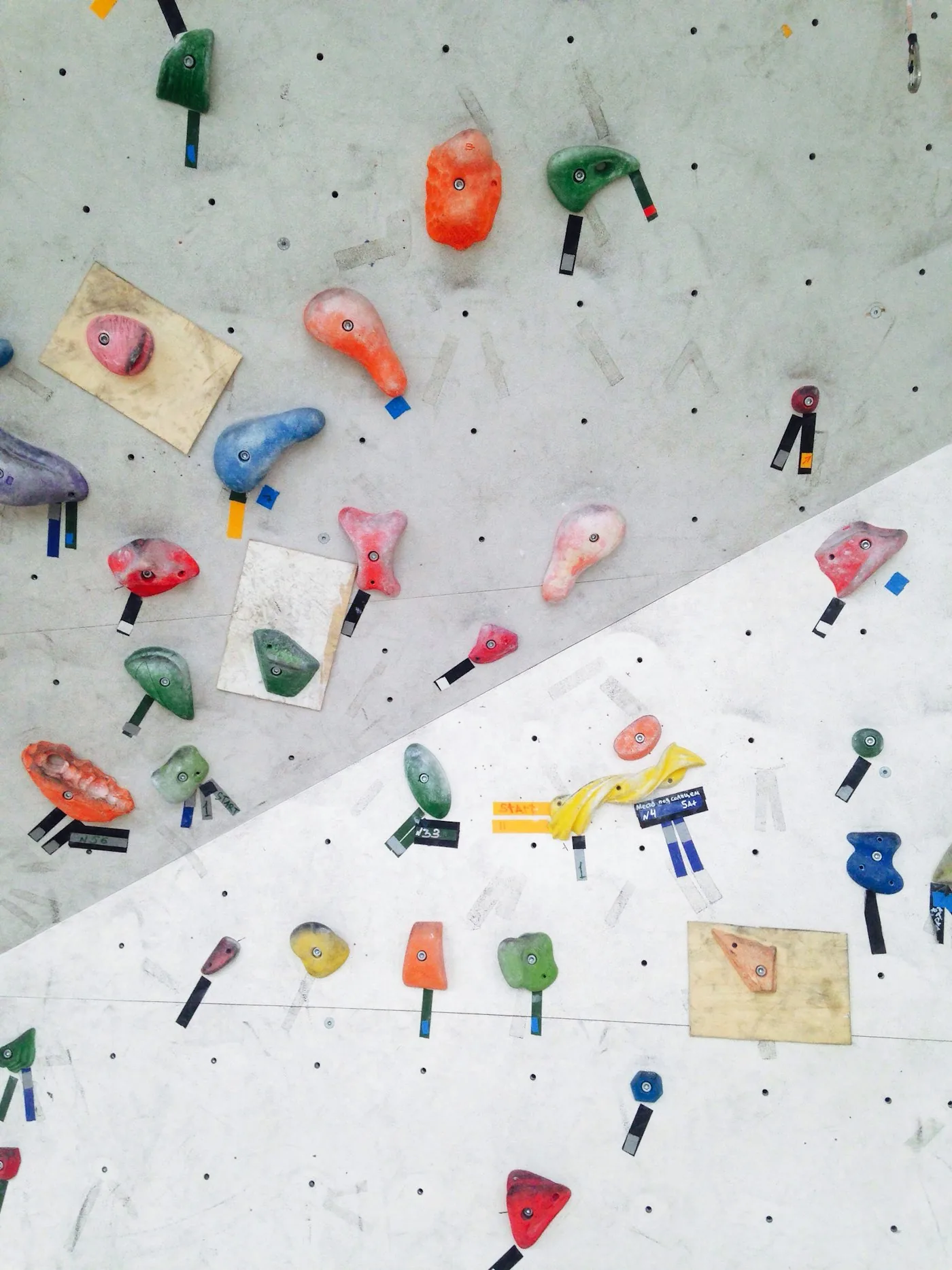 Photo: davidpisnoy / Unsplash
Why the existing tools leave the gap
Three tools are in play, and all three solve something else.
The gym software - Webclimber, Freeclimber and the like - handles memberships, access, course booking and tills. That’s administration, and it’s good at it. About what’s happening on the wall it says nothing.
The climbing app, TopLogger and relatives, comes closer: it shows the current boulder stock. But it shows it inside the app, to logged-in users who are already there. Not publicly, not in a Google search, and above all not forward-looking - it doesn’t answer “when is the red sector due”, because it only knows the current state, not the plan.
And Instagram, the third, is the most fleeting of all: good for the moment, worthless for planning. A story reaches those currently scrolling, and no one else.
Between “administration”, “app for the logged-in” and “fleeting moment”, the one layer that matters stays vacant: the public, permanent, forward-looking communication about the new.
What a permanent sector page looks like
The core is a page on your own site that breaks the gym down into its sectors - one tile per sector. On each tile the essentials: when it was last reset, when the next date is planned, which setting team is behind it, plus a before-and-after image. It needs no more, and less would be too little.
The decisive part, again, is the upkeep. The setting team, having just finished, opens the page on a phone, sets today’s date on the sector, uploads a photo, roughly enters the next date - done, under a minute. No detour via the office, no editor. If it takes longer than putting away the ladder, it gets left; so the simplicity isn’t a convenience but the condition for it being lived at all.
For the guest this becomes something the story never could be: an overview that stays. Whoever’s weighing up whether the visit is worth it sees at a glance where it’s freshly set and where something happens next - and comes with purpose. The question in the WhatsApp group becomes moot, because the answer sits permanently in one place.
 Photo: nathan_cima / Unsplash
Where the limits are
Two things belong on the table. One is the boundary: this page doesn’t replace the climbing app with its tick-lists and ratings, nor should it. It doesn’t compete with it, it fills the gap beside it - the public announcement rather than the internal stock-keeping. Blur the two and you build a worse copy of something that already exists.
The other is, again, discipline. A sector page that isn’t kept current is worse than none - a “last set three months ago” tells the guest the opposite of what you wanted. Its value stands or falls on the updating being so easy that it becomes a matter of course after every reset.
If the new is what draws them
What such a page looks like depends on your gym: how many sectors, how often you reset, whether a before-and-after image is enough or you want to show the grade spread too, how your setting team prefers to keep it current. It can’t be taken off the shelf, because your setting rhythm and sector structure are yours - but it’s no big system either, just a lean thing with exactly one purpose.
If you’d like to know how this could work for your gym: I’m Eric Menge of EMIT Solution, reachable at info@emit-solution.com and via emit-solution.com. I build tailored solutions like this myself - one person who understands the site and the technology behind it, rather than handing you standard software built for memberships and access, not for what your guests actually want to see.
FAQ
Doesn't the climbing app like TopLogger already do this?+
Only partly, and for a different audience. The app shows the current boulder stock to its logged-in users inside the app - good for someone already climbing who has the app. What it doesn't do: show publicly and on Google what was just set, and certainly not when the next section is due. Precisely that public, forward-looking layer is missing - and an own page fills it.
Wouldn't Instagram do the job?+
For the moment yes, for planning no. A story about a freshly set sector is quick to post but gone after 24 hours, not searchable and invisible on Google. The regular weighing up whether the trip is worth it this week won't find the info there anymore. An own sector page is permanently there and answers the question any time.
Who keeps such a page current - doesn't it take time?+
Only if it's cumbersome, so everything hinges on the handling. The setting team, having just finished, sets a date from a phone and uploads a photo - that's it. No editor, no detour via the office. If updating takes longer than tidying the mats afterwards, it won't get done; so it has to take under a minute.
Does this replace our gym software?+
No. Software like Webclimber or Freeclimber handles memberships, access, course booking and tills - that stays. The sector page is something quite different: the public communication about what's happening on the wall. The two don't overlap; one is administration, the other is the shop window for the reason someone comes.
Does it help new guests too?+
Yes, and that's the underrated part. Because the page is public and visible on Google, even someone who doesn't know the gym yet sees that fresh setting happens here regularly and there's life on the wall. A lively, maintained sector overview is a signal outward - unlike an app you first have to get into before you see anything at all.
Want to know more?
In a free intro call we discuss how you can use these topics for your company. Not a sales pitch, but an honest assessment.
Book a free intro call