

A family is weighing up whether the trip is worth it. Twenty minutes there, twenty back, and the child reacts to nuts. The favourite flavour isn’t there every day, and whether any nut-free flavours are fresh today is known only to whoever’s standing behind the counter. So they’d have to call - right in the rush, when the queue is out the door and nobody can pick up the phone. In the end they set off on the off chance, or not at all.
That’s the real point, and it has nothing to do with the quality of the ice cream. It has to do with the fact that in a genuine artisan shop something different is in the counter every day - and that this information isn’t anywhere a guest can find it before the drive.
Why the rotation is the problem
A kiosk with ten fixed industrial flavours doesn’t have this problem. An artisan maker does: perhaps thirty flavours get made, but only fifteen fit in the counter at once. Which fifteen is decided in the morning, by stock, season and mood. That’s exactly the appeal - and at the same time the reason nobody knows in advance what awaits them.
For most guests that’s fine, they just look at what’s there. For two groups it isn’t. Some come for a particular flavour and would have driven for nothing. Others need to know what’s in it before they even set off - because a trace of nuts isn’t a detail, it’s a reason to stay away entirely. And it’s precisely these guests, the ones with the greatest need to plan, that the rotating counter lets down.
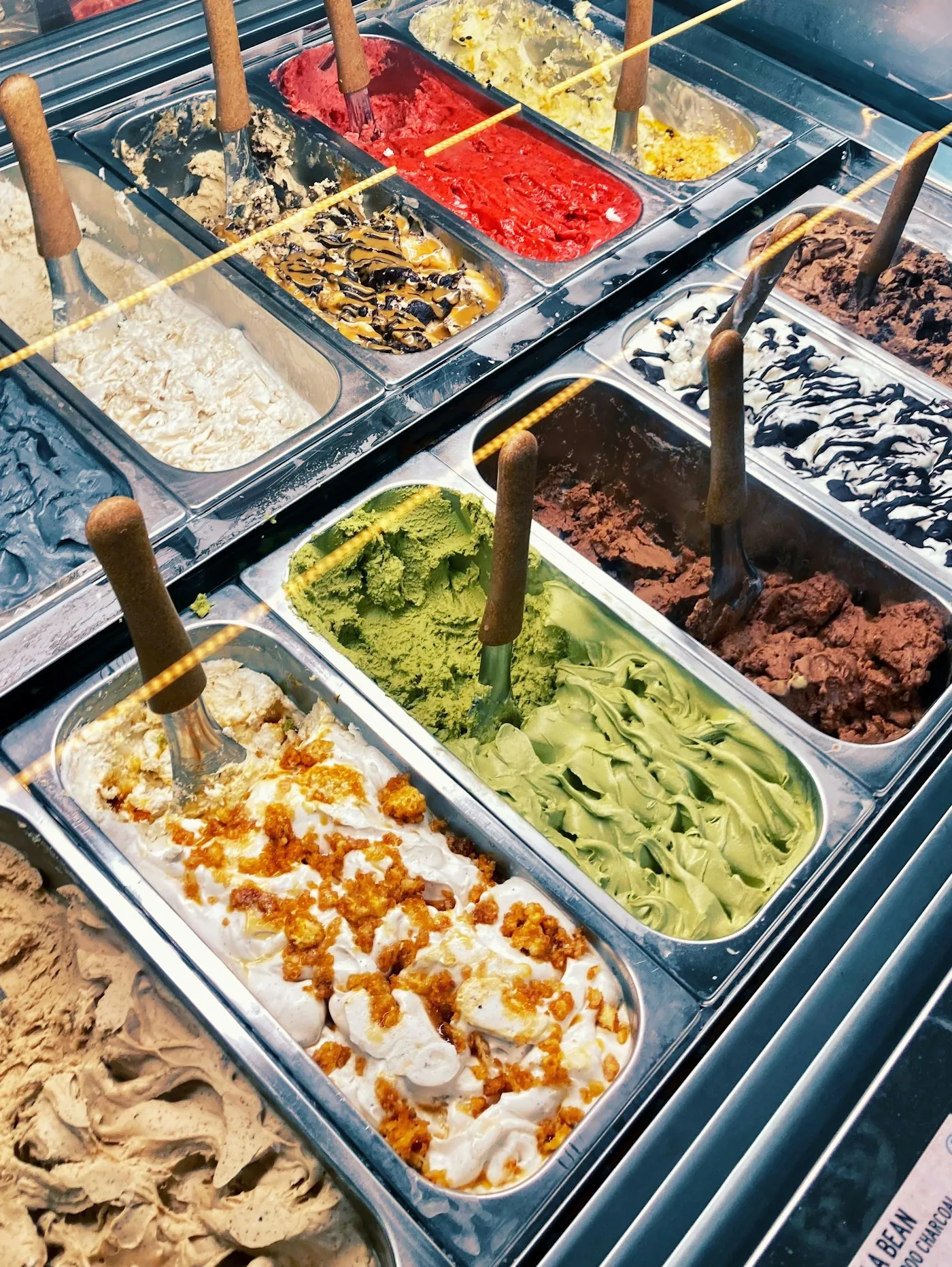 Photo: selaa_id / Unsplash
Why the obvious routes fall short
Two solutions come to mind, and both leave the gap.
Instagram is the first. A story with the day’s flavours is quick to post, but fleeting: gone after 24 hours, not searchable, not filterable, and absent from a Google search. The family wanting to check for “nut-free” before the drive would have had to be in the app at just the right time. A story reaches the regulars who already follow - not the person who’s planning right now.
Off-the-shelf allergen tools are the second. They exist for hospitality, and they’re good - for fixed menus that rarely change. A restaurant sets up its menu once and then leaves it for months. An artisan maker would have to reassemble fifteen of thirty flavours every morning. A menu-management system is too heavy for that; what’s missing is something far simpler.
What a lean solution looks like
The core is a “today’s flavours” page, and the decisive part is how easily it’s kept current. The thirty flavours are entered once, each with its allergens. After that the daily upkeep isn’t typing but ticking: staff run through from a phone in the morning which flavours are in the counter today, set the ticks, done. No calculator, no text, none of the thirty seconds nobody has in the rush.
For the guest this becomes a page showing what’s there today - and one that filters: by dairy-free, vegan, nut-free, gluten-free. The family with the allergic child sees before setting off whether the trip is worth it, without calling and without risk. And whoever’s just after their favourite flavour knows in advance too.
The second gain is hidden. Declaring the fourteen main allergens for loose goods like ice cream is mandatory anyway - EU food information rules require it, usually met via a folder at the counter or a notice. Getting the allergens cleanly into the system per flavour once handles that duty and turns it, along the way, into a service rather than a box to tick.
 Photo: sadswim / Unsplash
Where the limits are
Two things belong on the table. One is reliability: a page like this is only as good as the discipline to update it each morning. So everything hinges on the effort - if the ticking takes longer than half a minute, it gets left, and an outdated page is worse than none. The simplicity isn’t a convenience, it’s the precondition for it working at all.
The other is allergen liability. An online declaration doesn’t remove the duty of care: cross-contamination in production, the shared scoop, traces - that has to be handled cleanly in the shop and communicated honestly. The page shows what’s stored; it doesn’t replace the responsibility for the entry being correct.
When your counter looks different every day
How such a page is tailored depends on your shop: how many flavours you make, how often you change, which allergens and labels really matter to you, whether filtering by vegan and dairy-free matters to your guests. It can’t be taken off the shelf, because your range and your daily rhythm are yours - but it’s no big system either, just a deliberately lean thing with exactly one purpose.
If you’d like to know how this could work for your parlour: I’m Eric Menge of EMIT Solution, reachable at info@emit-solution.com and via emit-solution.com. I build tailored solutions like this myself - one person who understands the site and the technology behind it, rather than forcing you into hospitality software built for restaurant menus, not for an artisan maker.
FAQ
Wouldn't Instagram do the job?+
For the moment yes, for planning no. A story is gone after 24 hours, you can't filter it for 'nut-free', and it doesn't show up on Google. Someone with an allergy or a long drive who wants to know whether the trip is worth it today won't find the info there - they'd have to have happened to be in the app at the right time. An own page is permanent, searchable and filterable.
Aren't there ready-made allergen tools for hospitality?+
Yes, but they're built for a different problem. Tools like FoodNotify or menutech manage fixed menus that rarely change. An artisan maker rotates which 15 of its 30 flavours are in the counter every day. What's needed isn't a menu-management system but a one-tap toggle: flavour in today or not, with its stored allergens.
How much effort is the daily upkeep?+
That's the decisive point: it has to take seconds, or it won't get done. The 30 flavours and their allergens are entered once. After that, staff just tick from a phone in the morning which ones are in the counter today - no typing, no calculator, no effort between two customers. Anything heavier fails in the daily rush.
What does this have to do with the labelling duty?+
EU food information rules require the 14 main allergens to be declared even for loose goods like ice cream - that has to be met anyway, usually via a folder or notices. Getting the allergens cleanly stored per flavour meets the duty and gives the guest an advance service at the same time. The obligation becomes a benefit.
Is it worth it for a small parlour?+
It depends less on size than on how often the range changes and how many guests come with allergies or a long drive. A maker with daily-changing, unusual flavours benefits more than one with ten fixed standards. Where rotation and demanding guests meet, it's a small effort with a noticeable effect.
Want to know more?
In a free intro call we discuss how you can use these topics for your company. Not a sales pitch, but an honest assessment.
Book a free intro call